
Why "Fast" is the only feature that matters in 2026, and how to achieve it using Streams, Wasm, and Edge-Native logic.
1. The Death of the Loading Spinner
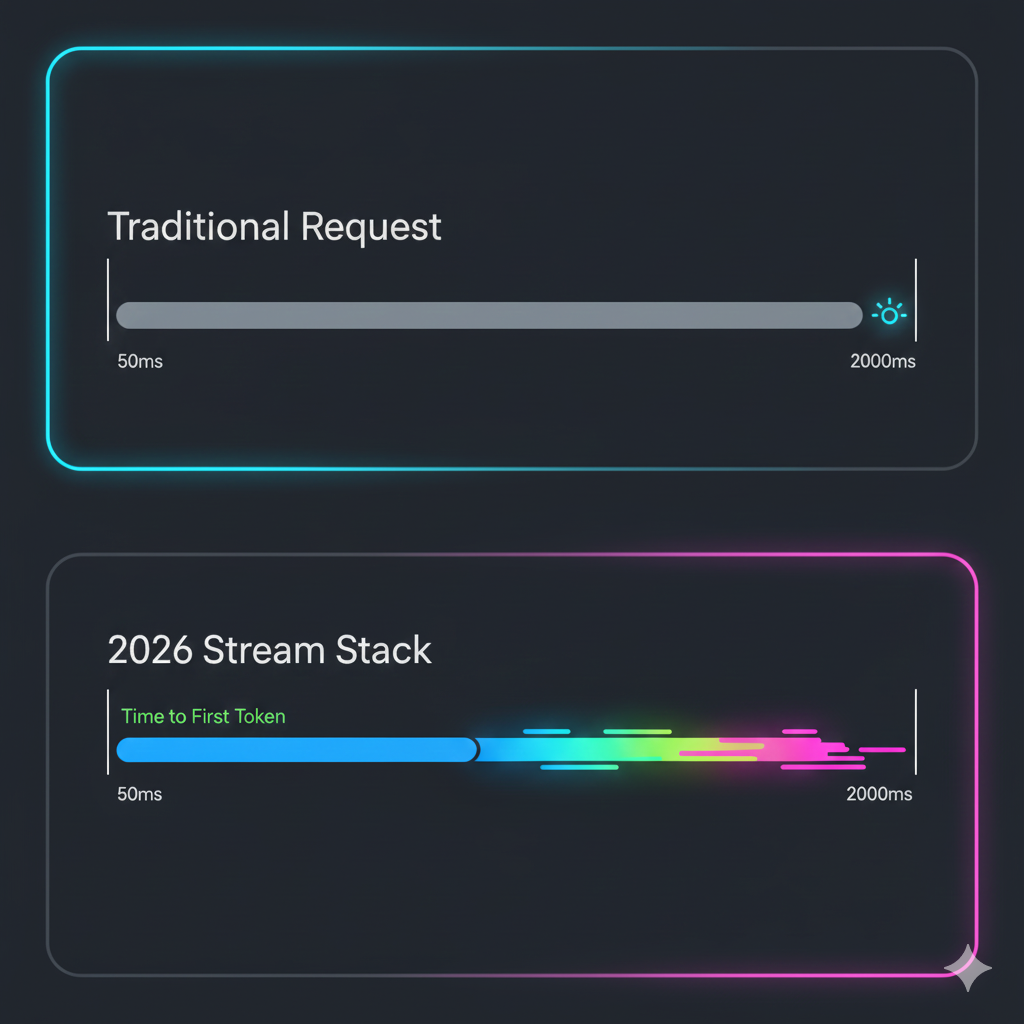
In 2026, the loading spinner is a relic of the past. As AI becomes the primary interface for our SaaS and hardware, user patience has hit an all-time low. Research shows that any interaction over 100ms breaks the "illusion of fluidity"—the moment your app stops feeling like a tool and starts feeling like a computer program.
If your AI takes 3 seconds to "think" before showing a response, or your hardware dashboard lags by 500ms, you aren't just slow; you’re broken. To win in 2026, we must treat latency as a P0 Bug.
2. Stream Everything: Breaking the JSON Bottleneck
The biggest mistake developers make is waiting for an AI model to finish generating its entire response before sending it to the client.
The 2026 Strategy: End-to-End Streaming
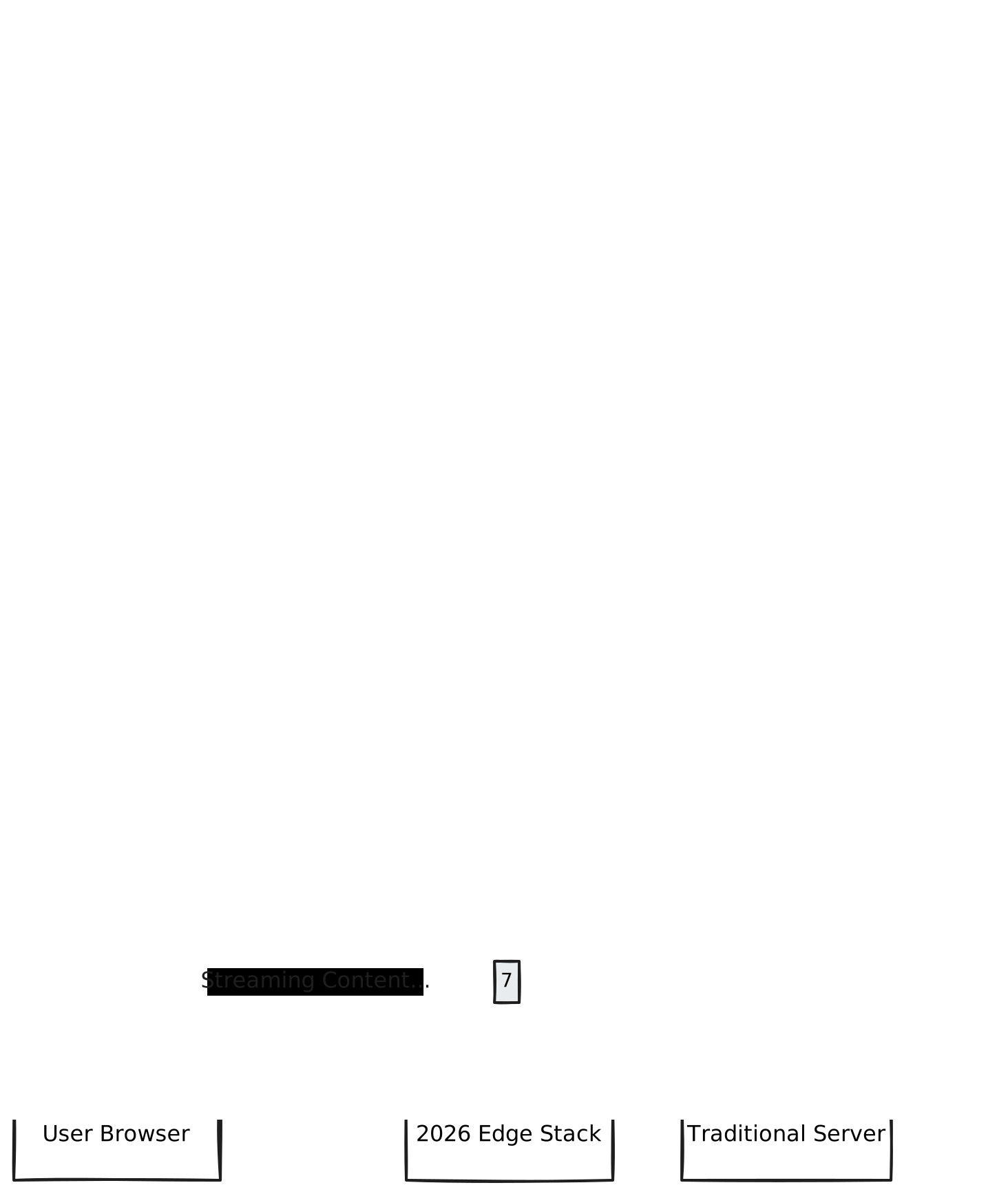
We no longer send bulk JSON. We use Server-Sent Events (SSE) or ReadableStreams to pipe tokens from the LLM directly to the user's UI as they are generated.
By using React Server Components (RSC) and Suspense, we can stream the data layer by layer. The user sees the first word in 50ms, even if the full response takes 2 seconds to complete.
Think of the naive pattern as: const result = await model.generate(); return Response.json(result); In 2026, the pattern shifts to: const stream = model.stream(); return new Response(stream); The architecture changes from “wait then send” to “generate as you go”.
Key Rule: If it's AI-generated, it must be streamed. If it's hardware telemetry, it must be pushed via WebSocket. Never pull; always push.
3. The Edge-Native Edge: Wasm and Zero-Distance Compute
Network physics is the final boss of latency. No matter how fast your code is, the speed of light limits a round-trip from San Francisco to a server in Singapore.
The Solution: Wasm at the Edge
In 2026, we move our "Heavy Logic" out of central data centers and onto Vercel Edge Functions or Cloudflare Workers.
For complex tasks—like filtering noisy sensor data from our Physical SaaS or running local encryption—we use WebAssembly (Wasm) written in Rust. This allows us to run near-native performance code at the Edge, just kilometers away from the user, reducing the Round-Trip Time (RTT) to single digits.
You don’t rewrite everything in Rust. You identify the CPU-heavy, mostly pure, latency-critical paths—like compression, parsing, validation, or signal processing—and drop just those into Wasm, keeping the rest in your normal TypeScript/Next.js stack.
4. Perception is Reality: Optimistic UI
Sometimes, you cannot beat the speed of light. In those cases, you must beat the user’s brain.
Optimistic Updates & Intent Prefetching
- Optimistic Updates: When a user toggles a switch on your dashboard to turn off a physical device, the UI should reflect the "Off" state instantly. We update the local state first and sync with the hardware in the background. If the hardware fails to acknowledge (ACK) within 2 seconds, we roll back the UI with a subtle notification.
- Intent matters here: instead of snapping the switch back harshly, you can add a small shake animation and a gentle toast like “Device did not respond, reverting,” so the experience feels deliberate, not broken.
- Intent Prefetching: Your AI Agents (from Part 8) should predict what the user wants next. If a user is hovering over a "Diagnostics" button, your Edge function should start pre-fetching the device health logs before the click even happens.
5. Visualizing the Latency Timeline
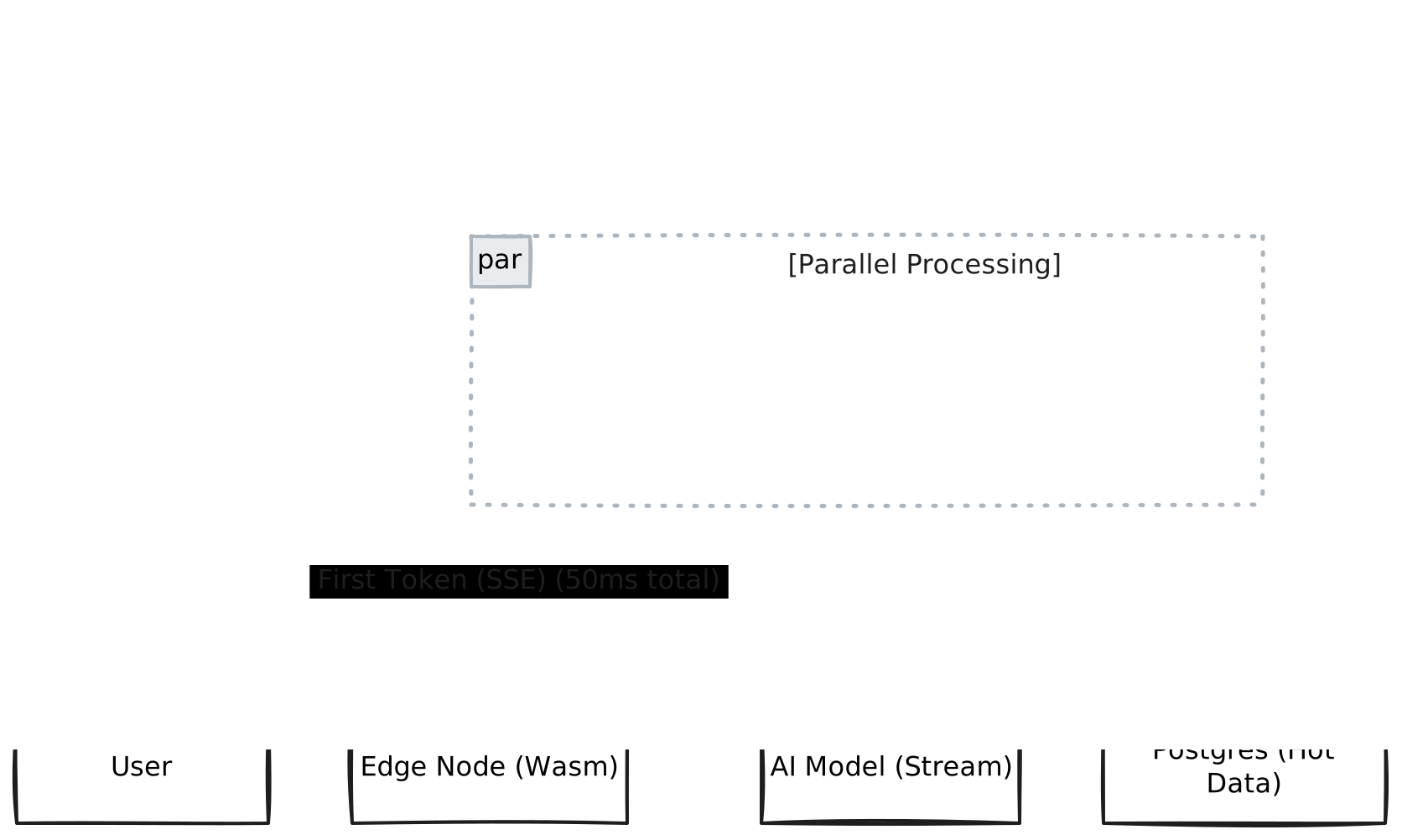
Your goal is to make the “first token” arrive under 100ms, even if the full operation takes longer. Everything in the diagram exists to protect that first impression.
6. Summary: Speed is Your Competitive Moat
In 2026, users won't read your feature list; they will feel your performance. A SaaS that responds instantly builds trust. A SaaS that lags creates friction.
By obsessing over the 100ms threshold, you aren't just optimizing code; you are optimizing the user's dopamine loop. Fast apps feel like magic. Slow apps feel like work.Your agents, your hardware, and your architecture are already strong—winning the latency war is how you make all of it feel effortless.
The Latency Audit:
- Is your AI response streaming token-by-token?
- Are you using Edge Functions to process data near the user?
- Do your hardware controls use Optimistic UI updates?
- Are you using Wasm for heavy client-side or edge-side computation?
Next Step: We have built, scaled, and optimized. Now, it's time for the grand finale. In Part 10, we’ll explore The Rise of the "Company of One"—reflecting on why 2026 is the greatest era in history to be a solo builder and how to sustain your vision for the long term.